

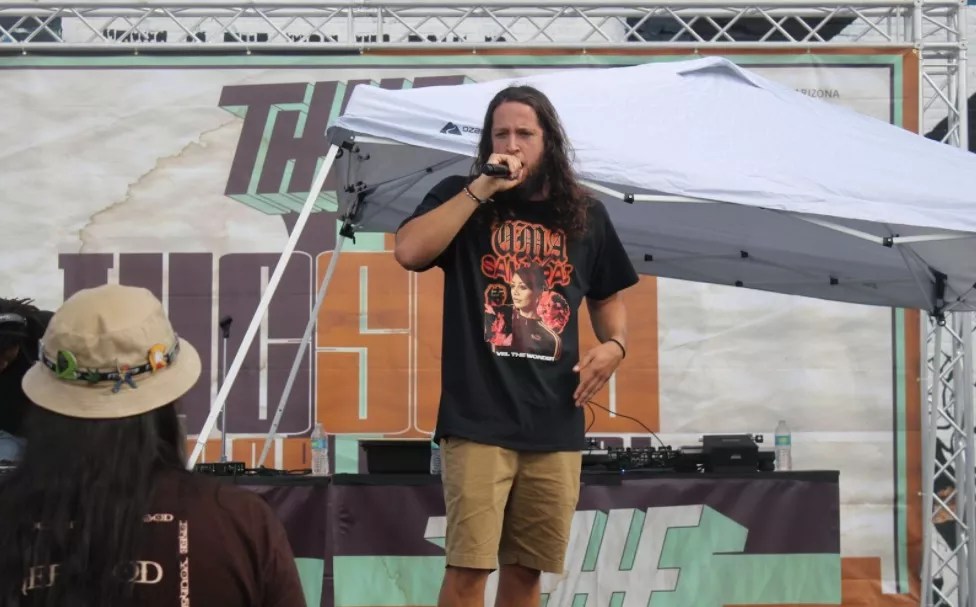
The Tucson Hip Hop Festival returned after a two-year hiatus on March 19 and 20. The two-day event began with a celebration of talent in a block party at 191 Toole, and the second day held educational seminars at the University of Arizona Poetry Center.
“I heard the event was coming back after COVID-19 and I just wanted to come here with the whole community and just have a good time,” local breakdancer Vortex said.
The four elements of hip-hop were showcased and discussed throughout the weekend: break dancing, deejaying, rapping, and graffiti. Artists at the festival were encouraged to push themselves to their limits, with various contests and battles.
“[Graffiti is] the only form of art where the artist never has to touch the surface,” local graffiti artist Yeroh said. “You can be as creative as you want and there’s no limitation for what you can do except for creativity.”
The elements share a common theme of accessibility and freedom, as they stem from hip-hop’s roots in the urban parts of the East Coast, with art being cultivated from whatever resources were available to the creators.
“Hip-hop is both music and culture seated in Black folks’ history and ways of moving through the world presently,” said UA Africana Studies professor Erika Gault. “The more that we understand [hip-hop] and its present concerns then the more we can understand it historically too.”
Gault was among the panelists who spoke during the second day of the event. Discussions included a chronicle of religion, cultural diversity and justice in hip-hop, a conversation on how to cross the urban world as a graffiti artist, a Q&A session with successful music industry figures on what it takes to make it and much more.
“Anybody that I know that is successful, the number one story that they all talk about is just not giving up,” said Juan Fleischer, Nogales native and producer and music engineer for Atlantic Records and Artist Partner Group. “There’s just a lot of stories of the struggle, and the cards can totally be against you, but successful music people turn those cards to make it positive for them.”
Despite much of the community rejoicing at the festival’s return, some attendees also pointed out that there could be room for improvement.
“I think it was fun but it definitely needed more people, more vendors and better space,” attendee Myana Hibbert said. “But this is the first year after [COVID-19] and being closed down so I’ll give them a break.”
But attendees, artists, and panelists alike hope that this is only the beginning for the festival’s return, one they feel Tucson needs.
“A lot of ways when we think about hip-hop we think more about the East Coast, and more recently the West Coast, but never the Southwest,” Gault said. “So the kind of connections and communities that are right here in Tucson and the surrounding areas is really important to showcase.”
For more information, visit tucsonhiphopfestival.com
This article appears in Mar 24-30, 2022.
